


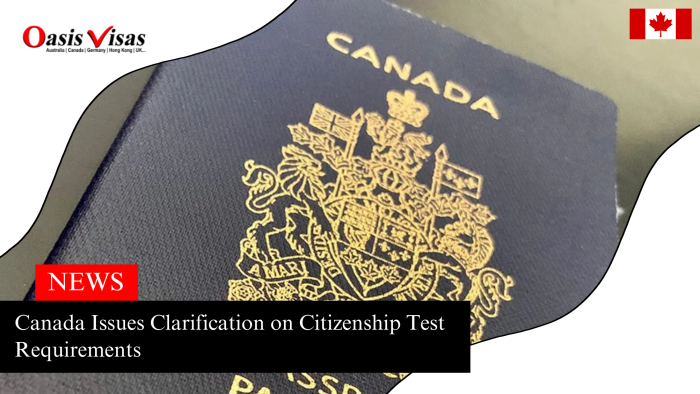
A Canadian citizenship certificate is an official proof of your Canadian citizenship, issued by the Government of Canada. While many people are automatically citizens at birth, having this certificate is often necessary to confirm your status especially if you need to apply for a Canadian passport.
It’s important to note that a citizenship certificate is not a travel document, so you cannot use it in place of a passport. Instead, it acts as official proof of citizenship. This guide explains who can apply for a Canadian citizenship certificate, the rules around citizenship by descent, recent proposed changes to the law, and how to apply for one.
Who Can Apply for a Canadian Citizenship Certificate?
If you were born outside Canada but have at least one biological or legal parent who was either born in Canada or became a naturalized citizen before you were born, you may already be a Canadian citizen. In this case, you can apply for a citizenship certificate as proof.
This is called citizenship by descent. However, under current Canadian law, this applies only to the first generation born abroad. In simple terms, if your parents are Canadian by descent, you cannot automatically inherit citizenship from them. This restriction is called the first-generation limit (FGL).
Apart from proving citizenship by descent, you may also apply for a new certificate if:
- Your original certificate is lost, stolen, or damaged.
- You legally changed your name and need updated documents.
Changes to the First-Generation Limit (FGL)
On March 13, 2025, the Canadian government introduced interim measures for people affected by the FGL. These measures allow certain individuals to apply for discretionary grants of citizenship, as long as their parent meets a “substantial connection to Canada” test.
This test requires the Canadian parent to have lived in Canada for at least three years (1,095 days) before the child’s birth or adoption.
In addition, Bill C-3, introduced on June 5, 2025, aims to remove the FGL altogether. If passed, children of Canadian parents who meet the substantial connection test would automatically become citizens. The bill is still in its early stages and must go through several steps before becoming law.
Exceptions to the First-Generation Limit
Some people are not restricted by the FGL. If your Canadian parent (or grandparent) was working abroad as a Crown servant at the time of your birth or adoption, you may still qualify for citizenship. This applies to those employed in:
- The Canadian Armed Forces
- The federal public service
- The public service of a province or territory
How to Apply for a Canadian Citizenship Certificate
Before applying, you can use IRCC’s “Am I a Canadian?” tool for guidance. This tool is not an official confirmation, but it can help you understand your eligibility. You can submit applications either online or through a paper form. The process usually involves:
Step 1: Get the application package
Includes the instruction guide, checklist, and forms.
Step 2: Collect your documents you’ll generally need:
- A completed Application for a Citizenship Certificate form (CIT 0001).
- Two pieces of valid government-issued ID (one with a photo).
- Two identical passport-style photos (only one for online applications).
- Translations of documents not in English or French.
- A Use of Representative form if you are using a representative.
- Any other documents required for your personal situation.
Step 3: Pay the fee
The application fee is $75 per person. Families applying together must pay all fees at once. Payment can be made online or through a Canadian embassy/consulate if you are abroad.
Step 4: Submit the application
- Online applicants will receive an Acknowledgement of Receipt (AOR) in their IRCC account.
- Paper applicants will receive an AOR by email or mail, depending on their location.
Processing Times
Currently, processing takes at least five months, but it may take longer if you:
- Apply from outside Canada or the U.S. (add 3–4 months).
- Apply for a minor child living abroad (add 6–8 months).
IRCC may also request additional documents for complex cases, which can extend timelines. Urgent processing is available for situations like employment, education, accessing benefits, or avoiding harm. However, approval is not guaranteed even if you qualify.
Discretionary Grants
If you are affected by the FGL but believe you qualify under the interim measures, you must first apply for a citizenship certificate. IRCC will then:
- Confirm that the FGL applies to you, and
- Invite you to apply for a discretionary grant of citizenship.
You cannot apply for this grant on your own without IRCC’s invitation.
Who Does Not Need to Apply
- Children born in Canada are automatically citizens. Their Canadian birth certificate is enough proof.
- Naturalized citizens automatically receive a citizenship certificate when they become citizens.
The only exceptions are children born in Canada to foreign diplomats, who do not automatically gain citizenship.