


March 12, 2026
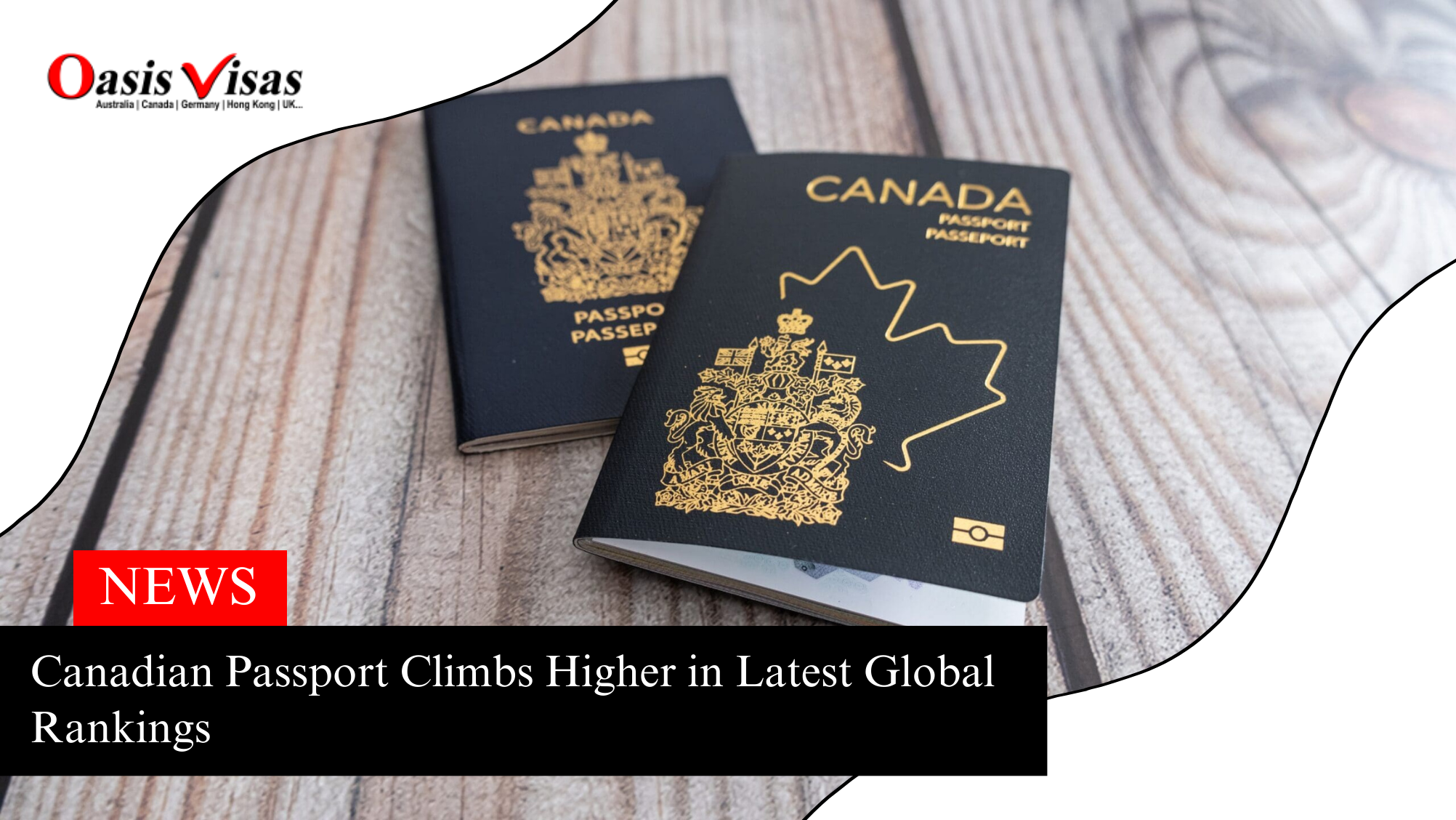
Canada’s passport has improved its global standing in the latest update of the Henley Passport Index, climbing from eighth to seventh place worldwide since the beginning of 2026.
With this improvement, holders of the Canada passport can now travel to 182 destinations worldwide without obtaining a visa in advance or by receiving a visa on arrival.
The Canadian passport also continues to rank as the strongest passport in North America, ahead of the United States, which remains in tenth place globally.
At the top of the rankings, Singapore continues to hold the title of the world’s most powerful passport.
During 2025, Canada’s passport ranking saw several fluctuations. It began the year in seventh place, dropped to eighth place in July, and ended the year at ninth place.
However, the latest update shows a positive trajectory in 2026, with Canada climbing back to seventh place globally.
The newest rankings highlight strong competition among the world’s most powerful passports. Due to tied positions, 38 countries appear within the top ten rankings.
European countries dominate the list, accounting for 29 of the top passports, while Asian nations also hold several leading positions.
Below is the latest top 10 passport ranking based on visa-free travel access:
| Rank | Country | Visa-Free Destinations |
| 1 | Singapore | 192 |
| 2 | Japan | 187 |
| 2 | South Korea | 187 |
| 2 | United Arab Emirates | 187 |
| 3 | Sweden | 186 |
| 4 | Belgium | 185 |
| 4 | Denmark | 185 |
| 4 | Finland | 185 |
| 4 | France | 185 |
| 4 | Germany | 185 |
| 4 | Ireland | 185 |
| 4 | Italy | 185 |
| 4 | Luxembourg | 185 |
| 4 | Netherlands | 185 |
| 4 | Norway | 185 |
| 4 | Spain | 185 |
| 4 | Switzerland | 185 |
| 5 | Austria | 184 |
| 5 | Greece | 184 |
| 5 | Malta | 184 |
| 5 | Portugal | 184 |
| 6 | Hungary | 183 |
| 6 | Malaysia | 183 |
| 6 | Poland | 183 |
| 6 | United Kingdom | 183 |
| 7 | Australia | 182 |
| 7 | Canada | 182 |
| 7 | Czechia | 182 |
| 7 | Latvia | 182 |
| 7 | New Zealand | 182 |
| 7 | Slovakia | 182 |
| 7 | Slovenia | 182 |
| 8 | Croatia | 181 |
| 8 | Estonia | 181 |
| 9 | Liechtenstein | 180 |
| 9 | Lithuania | 180 |
| 10 | Iceland | 179 |
| 10 | United States | 179 |
The difference between the first and tenth-ranked passports is only 13 visa-free destinations, highlighting how competitive global mobility rankings have become.
One of the most notable changes is the rapid rise of the United Arab Emirates, which climbed from fifth place earlier this year to share the second position globally with Japan and South Korea.
Meanwhile, the passport of Malaysia also saw a significant improvement, moving from ninth place to sixth place in the latest rankings.
Another change is Sweden holding the third position alone, after previously sharing that ranking with several European countries.
The Henley Passport Index ranks global passports based on how many destinations their holders can access without obtaining a visa before traveling.
The ranking relies heavily on travel data from the International Air Transport Association (IATA), combined with research and publicly available information.
Currently, the index evaluates 199 passports against 227 travel destinations worldwide, and the rankings are updated regularly to reflect changes in global visa policies.
Canada’s improved position in the rankings was supported by expanded travel access, particularly the introduction of visa-free entry to China for Canadian passport holders.
Starting February 17, 2026, Canadians can travel to China without a visa for up to 30 days for purposes such as tourism, business, personal visits, exchanges, or transit.
The policy is expected to remain in effect until December 31, 2026.
Previously, China was one of the major destinations where Canadians needed to apply for a visa before travel. The new visa-free policy increased Canada’s travel access from 181 to 182 destinations, helping boost its ranking.
For most immigrants, obtaining a Canadian passport involves several steps:
Some individuals with Canadian parents or grandparents may qualify for citizenship by descent, allowing them to apply directly for proof of citizenship.
Recent legislative changes, including the passing of Bill C-3, have expanded eligibility for individuals who may qualify for Canadian citizenship through family lineage.
PR Visa: Canada | Canada Express Entry | Canada-PNP | Australia | UK | USA | Germany | Austria | Hong Kong
Work Visa: Canada | Australia | Singapore | Ireland | UAE | Luxembourg
Investor Visa: Europe Investment | Canada Investment | Australia Investment | Caribbean Investment | US Investment | UK Investment | New Zealand Investment | Hong Kong
Study Visa: Canada | Australia | UK | USA | Germany | Ireland | France | Europe
Visitor Visa: Canada | Australia | UK | USA | Germany | Ireland | Singapore | Europe | Hong Kong | South Africa
Eligibility Points Calculator: Canada | Australia | Germany | UK